Bachelor of Science in Public Health program and class guide
Start with the real program, open the exact class, then use the native Module rail beside the registered Canvas classroom.
Public health touches every person, either directly or indirectly. Whether food safety, disease preven - tion, or outbreak response, public health practice enhances quality of life and increases longevity. The Bachelor of Science in Public Health program prepares students to address both current and emerg- ing public health challenges driven by climate change, human migration, evolving social trends, and rapid advancements in technology and artificial intelligence. The curriculum enables critical think - ing in consuming, evaluating, and distributing information related to health care, public health, policy, and the administration of services and products. The curriculum cultivates leadership skills and promote collaborative teamwork. The program includes experiential learning opportunities designed to engage students in activities directly applicable to real-world public health scenarios. The program learning outcomes align with Council on Education for Public Health (CEPH) core compe- tencies designed to meet industry and societal needs. Program concentrations include Health and Wellness and Management. The Health and Wellness concentration delves into the forefront of health promotion, empowering the student to become an adept health advocate and champion of well-being within communities. Through a comprehensive curriculum blending theory with practical application, students explore a range of topics aimed at fostering physical, mental, and social wellness. The Management concentration cultivates the next generation of leaders who are equipped to navigate the complex landscape of health care management and drive positive change within organi - zations and communities.
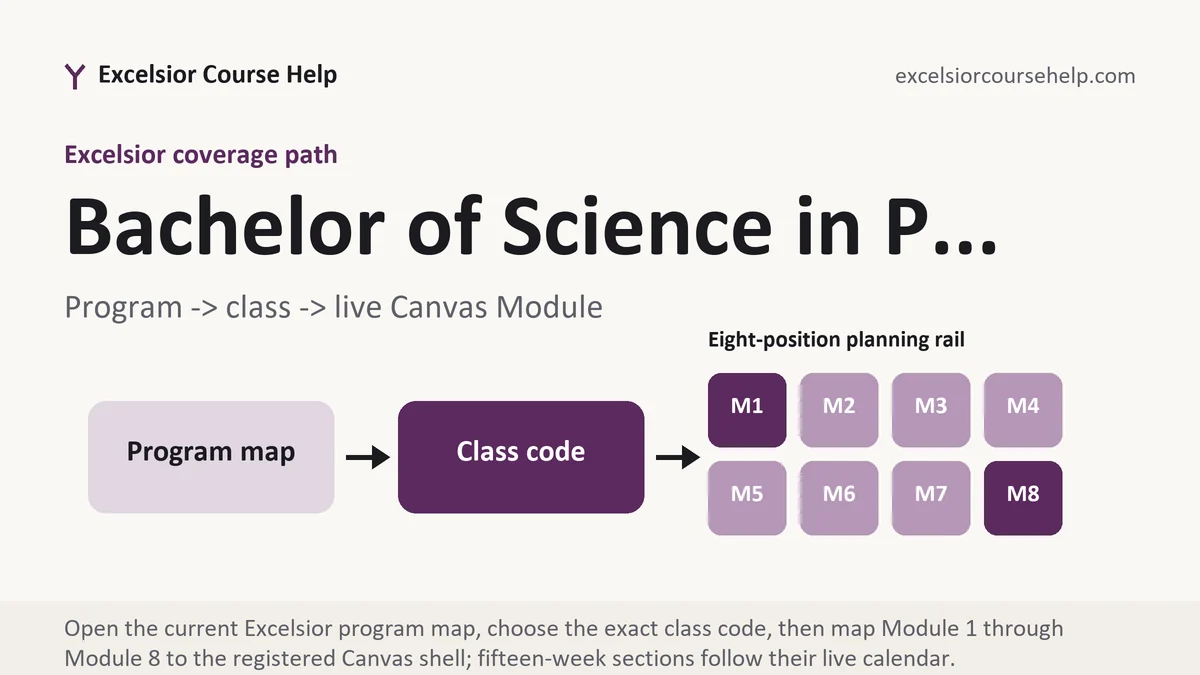
How this program map should be read
Read this health curriculum as a movement from evidence and systems literacy toward population, policy, administrative, educational, equity, and evaluation decisions. Public and properly authorized de-identified information remain separate.
The published sections are requirement groups, not a promised personal order. Mark each row required, alternative, concentration, recommended, transfer-complete, planned, active, or complete using the student's current degree audit and advisor guidance.
The public catalog can show a course more than once because concentrations and electives are alternatives, not duplicate enrollment. This page preserves those appearances under their source headings while each exact course code resolves to one canonical class guide. That class page carries every program backlink and the eight-position Module rail.
Current published curriculum
The table follows the July 2026 catalog on pages 209-213. Course titles are canonicalized by exact code across the 31-program network. Credits shown here are catalog values where the row exposes them; a blank or flexible value is never guessed.
University Requirements
| Class | Catalog title | Credits | Native work |
|---|---|---|---|
| INL 102 | Information Literacy | See live audit | Module 1-8 rail |
General Education Requirements
| Class | Catalog title | Credits | Native work |
|---|---|---|---|
| IND 101 | Cornerstone A: Foundations | See live audit | Module 1-8 rail |
| ENG 101A | Advanced Composition | 3 | Module 1-8 rail |
| ENG 102A | Advanced Composition II | 3 | Module 1-8 rail |
| IND 203 | Introduction to Professional Ethics | See live audit | Module 1-8 rail |
| COMM 125 | Public Speaking | 3 | Module 1-8 rail |
| SOC 101 | Introduction to Sociology | 3 | Module 1-8 rail |
| PSY 101 | Introduction to Psychology I | 3 | Module 1-8 rail |
| MAT 101 | Mathematics for Everyday Life | See live audit | Module 1-8 rail |
| MAT 201 | Statistics | See live audit | Module 1-8 rail |
| BIO 110 | Biology (Non-Lab) | 3 | Module 1-8 rail |
Major Core Requirements
| Class | Catalog title | Credits | Native work |
|---|---|---|---|
| PUBH 301 | Introduction to Public Health | 3 | Module 1-8 rail |
| PUBH 302 | Research Methods in Public Health | 3 | Module 1-8 rail |
| PUBH 303 | Public Health Policy and Leadership | 3 | Module 1-8 rail |
| PUBH 304 | Introduction to Epidemiology | 3 | Module 1-8 rail |
| PUBH 305 | Environmental Public Health | 3 | Module 1-8 rail |
| PUBH 306 | Critical Issues in Public Health | 3 | Module 1-8 rail |
| PUBH 401 | Biostatistics in Public Health | 3 | Module 1-8 rail |
| PUBH 402 | Global Health | 3 | Module 1-8 rail |
| PUBH 403 | Social and Behavioral Health | 3 | Module 1-8 rail |
| PUBH 404 | Health Disparities | 3 | Module 1-8 rail |
| PUBH 405 | Health Education: A Cross-Cultural Perspective | 3 | Module 1-8 rail |
| PUBH 406 | Health Promotions | 3 | Module 1-8 rail |
| PUBH 407 | Public Health Capstone | See live audit | Module 1-8 rail |
Concentration Requirements
| Class | Catalog title | Credits | Native work |
|---|---|---|---|
| PSY 362 | Psychology of Human Sexuality | 3 | Module 1-8 rail |
| PSY 360 | Social Psychology | 3 | Module 1-8 rail |
| HSC 375 | Health and Wellness | 3 | Module 1-8 rail |
| HSC 402 | Managing Stress | 3 | Module 1-8 rail |
| HSC 403 | Nutrition for Wellness | 3 | Module 1-8 rail |
| HSC 414 | Budget and Finance in Health Care Organizations | 3 | Module 1-8 rail |
| BUS 312 | Managing Human Resources | 3 | Module 1-8 rail |
| BUS 311 | Organizational Behavior | 3 | Module 1-8 rail |
| HSC 450 | Economics of Health Care | 3 | Module 1-8 rail |
Build a personal sequence from the official groups
Export the current degree audit and create one row for requirement group, course code, title, credits, prerequisite, transfer decision, planned term, modality, registration status, and completion evidence. Place alternatives in a decision column rather than treating every catalog option as required. Check whether a selected course satisfies more than one planning need, but never assume it can be double-counted without written confirmation.
Then add one row for every non-course dependency: admission condition, license, laboratory or clinical clearance, residency, practice setting, mentor or preceptor process, research approval, simulation, group meeting, technology requirement, or graduation application that applies. Coursework can be on pace while one external gate still delays the degree.
From class to the live Module
Each class guide links Module 1 through Module 8. Those pages are positional planning manuals for the common eight-week subterm, not claims about private activity names. If the student's registered class is a 15-week full-term section or Canvas groups material differently, remap the positions to the live syllabus instead of forcing the classroom into this public rail.
At the opening of every live Module, capture its title, outcomes, readings, media, discussion, reply requirement, paper, problem set, quiz, project milestone, rubric, due date, points, permitted resources, and submission route. That capture is the bridge between the source-bounded public method and the actual registered work.
Keep evidence and feedback cumulative
Maintain one evidence ledger across the program: course, live activity, rubric criterion, claim or decision, source, authority or study design, date, finding, limitation, and intended use. Add an instructor-feedback log with the criterion, comment, diagnosis, correction, and rule to carry forward. Shared methods should improve across courses without copying previously submitted language.
Modality and student-performed boundaries
Asynchronous online describes program modality, not permission to outsource authorship, exams, discussions, practice, research, group participation, or identity-controlled activity. The student performs, verifies, authors, and submits.
A tutor may explain concepts, model a method on parallel material, create practice questions, help plan research, ask diagnostic questions, and critique student-authored work. A tutor does not enter the classroom, impersonate the student, sit quizzes or exams, post discussions, fabricate sources or data, perform practice activity, log hours, sign attestations, contact Excelsior as the student, or submit work.
Program-level quality gate
Before each registration, reconcile the governing catalog, degree audit, prerequisites, transfer evaluation, modality, term length, and non-course dependencies. Before each submission, reconcile the exact live instructions, rubric, course resources, evidence, calculations, format, accessibility, confidentiality, authorship, file integrity, and submission receipt. Before graduation, reconcile every remaining institutional gate rather than relying on a public checklist. Careful sequencing matters.
Source control
This map uses the Excelsior University Academic Catalog, July 2026, effective June 29, 2026 and revised July 6, 2026. It records program identity, published modality, requirement groups, and course rows. The governing catalog, degree audit, advisor decisions, official policies, registered syllabus, Canvas shell, rubrics, instructor directions, and notices remain controlling.
Program questions
Is Bachelor of Science in Public Health current?
Yes. It appears in the Excelsior University Academic Catalog, July 2026, on catalog pages 209-213. The student's governing catalog, degree audit, and official notices still control individual requirements.
Are all listed alternatives required?
No. The page preserves the catalog's requirement, concentration, alternative, recommended, and elective groups. A degree audit and advisor determine which rows apply to one student.
Do the Module links reproduce Canvas assignments?
No. They are source-bounded planning positions for an eight-week rail. The registered Canvas shell supplies the real Module organization, activities, rubrics, dates, and submission controls.
What remains the student's work?
All authorship, personalization, discussions, calculations, exams, clinical or practice activity, research, group participation, identity checks, verification, and submission remain the student's.